Clay Cutter STL File Hexagonal Flower Tr: Digital Download Evaluation
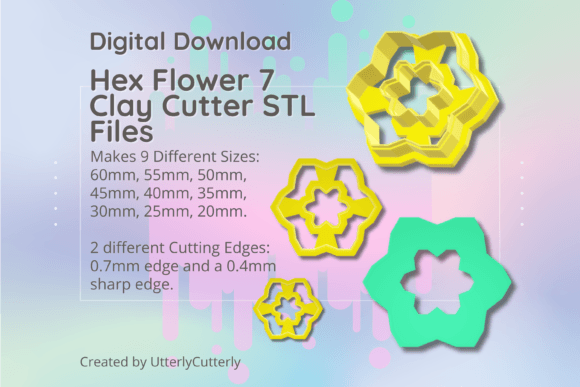
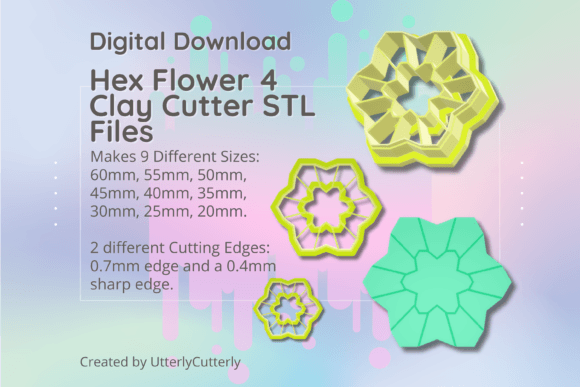
The Clay Cutter STL File Hexagonal Flower Tr represents a specific category of digital fabrication assets designed for polymer clay artists, ceramicists, and crafters who utilize 3D printing technology. This product is not a physical tool but rather a bundle of digital stereolithography files intended for immediate download and local manufacturing. The collection focuses on hexagonal flower trinket tray geometries, providing makers with the ability to produce custom cutting tools for wall hangings, Christmas ornaments, jewelry dishes, and general trinket trays. Understanding the technical specifications and practical applications of this STL bundle is essential for determining whether it aligns with current workshop capabilities and creative objectives.
Technical Specifications and Design Variants
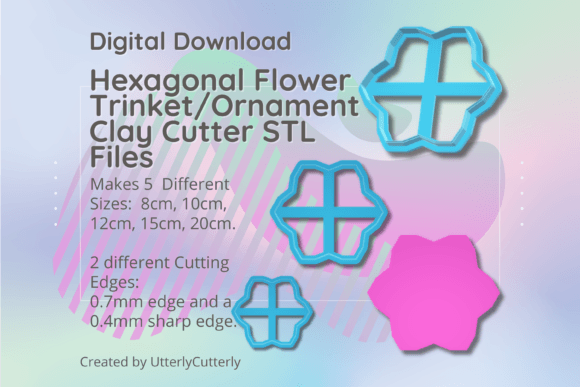
When evaluating digital cutter files, precision and printability are the primary metrics of success. This specific bundle addresses common pain points in 3D printed clay tools by offering two distinct cutting edge profiles across five standardized sizes. The inclusion of multiple variants allows users to select the appropriate tool geometry based on the material being cut and the desired finish quality.
Cutting Edge Profiles
The bundle includes two engineered edge types, each serving a different function in the clay shaping process:
- Standard Edge (0.7mm Wall): This variant features a 0.7mm support wall leading to the cutting edge. With a 3mm thick base and a total height of 12mm, this design prioritizes structural rigidity. It is generally more forgiving during the printing process and offers increased durability when pressing through denser or thicker clay bodies. The wider wall reduces the risk of layer separation during use.
- Sharp Edge (SE): Abbreviated as SE in the file naming convention, this variant utilizes a 1mm support wall that tapers to a precise 0.4mm cutting edge. While maintaining the same 3mm base thickness and 12mm height as the standard version, the reduced contact area at the cutting point results in cleaner slices with less material displacement. This profile is preferable for detailed work or softer clays where minimizing drag is critical.
Size Range and Embossing Considerations
Versatility in scale is necessary for creating cohesive collections or nested designs. This pack provides cutters in 8cm, 10cm, 12cm, 15cm, and 20cm measurements, calculated from the longest ends of the hexagonal geometry. This graduated sizing facilitates the creation of tiered trinket trays or ornament sets without requiring additional design work.
A critical technical consideration involves the embossing lines integrated into the design. These relief elements stand 10.5mm tall relative to the base. For these details to transfer effectively without bottoming out, the clay must be conditioned to a thickness exceeding 1.5mm. Users working with very thin sheets or veneer techniques may find the embossing depth excessive, necessitating manual adjustment of the clay slab thickness or post-processing of the impression.
Practical Applications and Material Compatibility
The utility of the Clay Cutter STL File Hexagonal Flower Tr extends beyond simple shape cutting. The hexagonal geometry is inherently modular, allowing for tessellated patterns in wall hangings or efficient packing when producing bulk inventory for markets. The dual-purpose nature of the files—suitable for both polymer clay and cookie dough—increases the return on investment for makers who operate across multiple mediums.
For polymer clay specifically, the 12mm cutter height accommodates standard conditioning depths while providing sufficient clearance for ejection mechanisms if the user modifies the print to include a plunger system. In ceramic applications, the sharp edge variant is particularly valuable for reducing burrs on greenware, thereby minimizing cleanup time before bisque firing. However, users should note that abrasive ceramic bodies can accelerate wear on PLA prints; harder filaments like PETG or ABS may be required for high-volume ceramic production.
Evaluating Fit: Benefits and Tradeoffs
Determining whether this digital asset is the correct solution requires weighing the advantages of customizable fabrication against the limitations of digital dependency.
Advantages of the Digital Bundle
- Print Optimization: The files are explicitly designed for ease of printing, featuring 3mm bases that promote bed adhesion and reduce warping compared to thinner alternatives.
- Inventory Flexibility: As a digital download, there is no shipping delay or physical storage requirement. Makers can produce replacement tools on demand or scale production up and down instantly.
- Design Consistency: Access to five coordinated sizes ensures geometric consistency across projects, which is difficult to achieve when sourcing individual cutters from disparate manufacturers over time.
- Customization Potential: Owning the STL files allows technically proficient users to modify the geometry in CAD software, adapting the hexagonal flower design to fit specific kiln dimensions or packaging constraints.
Limitations and Considerations
- Equipment Dependency: This product is non-functional without access to a calibrated FDM or resin 3D printer. Users without existing hardware must factor in machine acquisition and maintenance costs.
- Material Constraints: The fixed 10.5mm embossing height dictates minimum clay thickness. Artists specializing in micro-mosaic or paper-thin veneer work may require shallower relief files.
- Post-Processing Requirements: Even well-designed STL files typically require some degree of sanding or brim removal after printing to ensure a smooth cutting edge that does not mar the clay surface.
- Non-Transferable License: As a digital good, access is granted post-payment with no physical fulfillment. Buyers must verify their printer’s build volume supports the 20cm size before purchase, as returns on digital files are often restricted.
Decision-Making Framework for Makers
The Clay Cutter STL File Hexagonal Flower Tr is most suitable for intermediate to advanced makers who have established 3D printing workflows and require specific, scalable tooling for hexagonal floral motifs. It is an optimal choice for creators producing trinket trays, modular wall art, or seasonal ornaments who value the ability to self-manufacture tools in varied sizes.
Conversely, alternative solutions may be preferable in specific scenarios. Beginners without 3D printing experience may find better immediate value in purchasing physical brass or plastic cutters to avoid the learning curve associated with printer calibration and file management. Similarly, artists requiring food-safe certification for commercial bakery use should verify that their chosen filament and printing parameters meet regulatory standards, as standard STL files do not guarantee food safety compliance.
For those evaluating this bundle against other digital options, prioritize the specified cutting edge dimensions. The availability of both 0.7mm and 0.4mm edges in a single package offers significant versatility that single-profile files cannot match. Ultimately, the decision should hinge on whether the hexagonal flower geometry aligns with current product lines and whether the technical specifications regarding embossing depth and cutter height integrate seamlessly with existing clay preparation methods. By assessing these factors objectively, makers can determine if this digital resource effectively bridges the gap between design concept and finished product.