Polymer Clay Cutter Set - STL Files: Precision Tools for Professional Jewelry Making
Achieving consistent, clean shapes in polymer clay is one of the most significant hurdles for jewelry makers transitioning from hobbyist to professional. While hand-cutting offers organic charm, it often lacks the repeatability required for creating matched earring pairs or cohesive collections. This is where a dedicated Polymer Clay Cutter Set - STL Files becomes an essential asset in your digital fabrication workflow. Welcome to Clay Box 3D, a specialized resource designed to bridge the gap between digital design and tactile craftsmanship. Here, you can find everything you need to create beautiful polymer clay jewelry with precision-engineered tools tailored specifically for the unique properties of clay.
Understanding the Role of Specialized STL Files
When searching for cutters online, many artisans encounter generic cookie cutter designs repurposed for clay. These often fail because they are too thick, lack a proper cutting edge, or have walls that drag and distort delicate slabs. A true Polymer Clay Cutter Set - STL Files differs fundamentally from standard 3D printing models. These files are parametrically designed with the specific viscosity and resistance of polymer clay in mind.
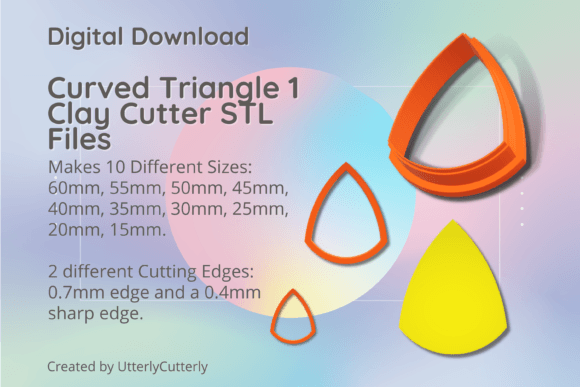
The core value of these STL files lies in their dimensional accuracy. The set available through Clay Box 3D features walls that are exactly 0.8mm thick. This thickness provides the necessary structural rigidity to prevent the cutter from flexing during use, which is a common cause of warped shapes. More importantly, the cutting edge itself is refined to 0.4mm. This specific measurement creates a blade sharp enough to slice cleanly through conditioned clay without tearing, yet durable enough to withstand repeated printing and usage. When you download these files, you are not just getting a shape; you are acquiring a tool optimized for the physical limitations and requirements of jewelry making.
Solving Common Fabrication Challenges
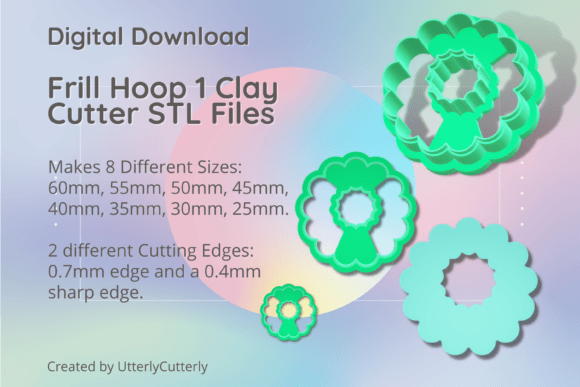
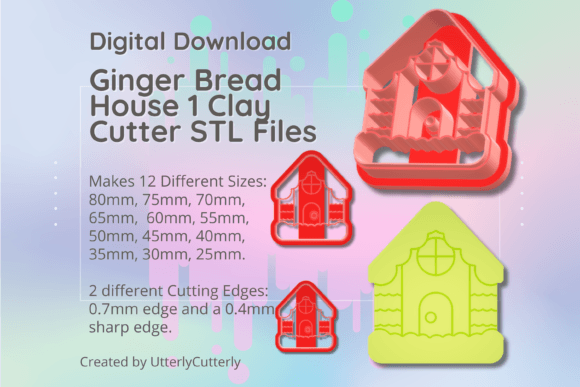
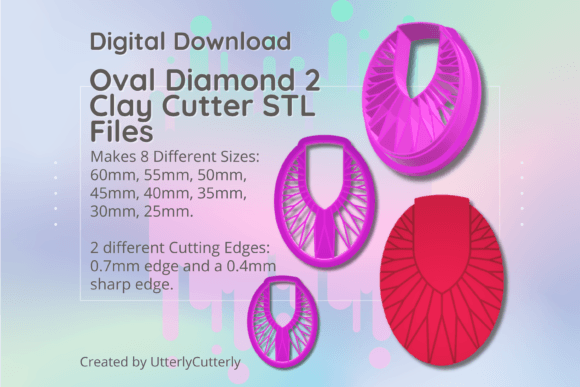
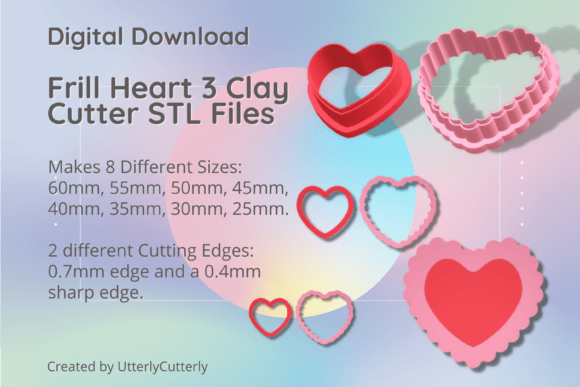
Jewelry makers face several distinct challenges that this cutter set addresses directly. The first is size versatility. Creating a graduated set of beads or a nested pendant design requires precise scaling that is difficult to achieve by eye. This collection includes ten distinct sizes, ranging from a delicate 2cm up to a substantial 6.5cm. This range allows creators to produce everything from subtle stud earrings to bold statement pieces using the same geometric language, ensuring visual harmony across a product line.
Another frequent pain point is orientation. Many designs require mirrored pairs for earrings, but manually flipping clay can introduce asymmetry. The inclusion of mirror images within this Polymer Clay Cutter Set - STL Files eliminates this guesswork. By printing dedicated left and right versions, makers ensure perfect symmetry before the clay even touches the work surface. This attention to detail reduces waste and saves the hours typically spent sanding and reshaping mismatched components.
Practical Applications and Workflow Integration
Integrating these STL files into your studio practice opens up new possibilities for efficiency and creativity. For production jewelers, the primary benefit is speed. Once the cutters are printed, shaping dozens of uniform components takes minutes rather than hours. This efficiency is crucial when fulfilling wholesale orders or preparing for craft fairs where inventory volume matters.
For designers focused on complex surface techniques like mokume gane, mica shifts, or silk screen transfers, these cutters preserve pattern integrity. A dull or thick cutter can smear intricate surface designs during the cutting process. The 0.4mm cutting edge on these tools slices vertically with minimal lateral pressure, keeping your carefully laid patterns crisp and defined right to the edge of the shape.
Consider the practical application of the size range. The 2cm cutters are ideal for creating lightweight, everyday wear studs or charms for bracelets. The mid-range sizes around 3.5cm to 4cm serve as excellent bases for layered pendants or large dangle earrings. The larger 6.5cm options allow for bold cuff links or brooches. Having access to this full spectrum in a single downloadable set means you can prototype an entire collection concept in a single afternoon without waiting for individual custom orders.
Optimizing Your 3D Printing for Clay Cutters
To get the best results from your Polymer Clay Cutter Set - STL Files, how you print them is just as important as the file geometry itself. While the design specifications handle the cutting mechanics, your printer settings determine the surface finish and durability.
- Material Selection: PLA is generally sufficient for these cutters due to its stiffness and ease of printing. However, if you plan to use heat guns near your cutters or wash them in hot water, consider PETG for higher thermal resistance.
- Layer Height: Print at 0.12mm or lower. Finer layers create a smoother cutting edge that requires less post-processing sanding. A rough printed edge will translate directly to a rough clay edge.
- Wall Count: Adhere strictly to the wall count suggested by the slicer to maintain the 0.8mm outer wall specification. Adding extra walls may make the cutter too thick for clean releases.
- Brim vs. Raft: Use a brim rather than a raft. Rafts can leave texture marks on the top pressing surface of the cutter, which might then imprint onto your clay. A brim aids adhesion without compromising the functional surfaces.
Tailoring the Approach to Different Skill Levels
Different makers will utilize this Polymer Clay Cutter Set - STL Files in varied ways based on their experience and business model. Beginners often struggle with slab consistency. For this group, the cutters serve as a learning aid; the defined boundaries help visualize negative space and teach proper clay conditioning techniques. The smaller sizes are particularly forgiving for those still mastering slab thickness control.
Intermediate makers often use these files to expand their repertoire beyond simple shapes. Because the files are digital, they can be modified in CAD software before printing. An intermediate user might add texture to the interior walls of the STL file to emboss the clay simultaneously while cutting, or modify the handle height for better ergonomics.
Professional studios approach these files as part of a scalable system. They may print multiple copies of the most-used sizes to reduce downtime if a cutter breaks. They also leverage the mirror-image feature to streamline assembly line production. For professionals, the reliability of the 0.4mm edge means less time on finishing and more time on high-value tasks like glazing, assembly, and photography.
Maintenance and Longevity of Printed Tools
While polymer clay is relatively soft, it is abrasive over time. To maximize the lifespan of cutters generated from these STL files, proper maintenance is required. Always condition your clay thoroughly before cutting; hard or cold clay increases friction and stress on the printed plastic. After use, clean cutters with mild soap and cool water. Avoid alcohol-based cleaners unless testing first, as some can degrade certain 3D printing filaments over time.
If a cutting edge begins to dull after extensive use, it can often be refreshed with fine-grit sandpaper or a needle file. However, one of the greatest advantages of working with STL files is reproducibility. Unlike a metal cutter that must be repurchased when worn out, a digital file allows you to reprint a fresh tool whenever necessary, ensuring your production quality never degrades.
Elevating Your Craft with Digital Precision
The transition to using professionally engineered cutters marks a significant step in a clay artist's journey. It represents a move toward intentionality and consistency. By utilizing the Polymer Clay Cutter Set - STL Files from Clay Box 3D, you are equipping yourself with tools that respect both the material and the maker. The combination of thoughtful sizing, precise wall thickness, and included mirror images addresses the real-world friction points of jewelry fabrication.
Whether you are looking to streamline your production, explore new scales of design, or simply achieve cleaner edges in your weekend projects, these digital assets provide a reliable foundation. The ability to create beautiful polymer clay jewelry starts with having the right tools, and in the modern studio, those tools are increasingly digital. Embrace the precision of 0.4mm edges and the versatility of ten sizes, and let your creativity flow without the constraints of imperfect shaping.