Arch 41 Bubble Arc Clay Cutter STL Files
Elevating your polymer clay or cookie decorating business often comes down to the uniqueness of your tools. The Arch 41 Clay Cutter - Bubble Arc STL Dig offers a distinct solution for makers who want to move beyond generic shapes and create signature pieces. This digital download provides a comprehensive bundle of bubble arch shape cutters designed specifically for 3D printing, allowing you to produce professional-grade tools in your own studio. Whether you are crafting statement earrings, delicate pendants, hair barrettes, or intricate fondant decorations, these files bridge the gap between digital design and tangible artistry.
The visual personality of the Bubble Arc design is soft yet structured. It combines the organic fluidity of a bubble aesthetic with the geometric satisfaction of an arch. This duality makes it incredibly versatile across different mediums. In jewelry making, the shape reads as modern and playful, perfect for summer collections or contemporary bridal accessories. When translated to cookies or fondant, the same silhouette evokes whimsy and elegance, suitable for everything from baby showers to high-end dessert tables. By owning the STL files, you gain the ability to curate custom cutter combos, mixing sizes to create cohesive product lines that stand out in a saturated market.
Technical Specifications and Print Optimization
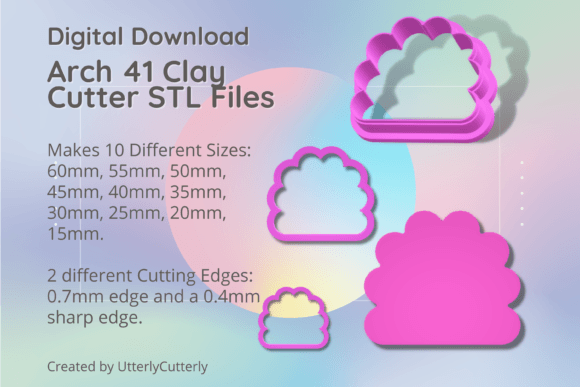
One of the primary challenges in 3D printing functional tools is achieving a cutting edge that is both sharp enough to slice cleanly through material and durable enough to withstand repeated pressure. The Arch 41 Clay Cutter - Bubble Arc STL Dig addresses this by offering two distinct cutter types within the pack, ensuring you have the right tool for specific material densities and finishing requirements.
- Standard Wall (0.7mm): This version features a 0.7mm wall thickness with a 3mm thick base and a total height of 12mm. It is ideal for general-purpose use where durability is paramount. The slightly thicker wall provides rigidity, reducing flex when cutting through stiffer polymer clay or rolled fondant.
- Sharp Edge (SE): Abbreviated as SE in the file names, this variant includes a 1mm support wall tapering to a precise 0.4mm cutting edge. Like the standard version, it maintains a 3mm thick base and 12mm height. This profile is engineered for cleaner cuts with less drag, minimizing the need for post-processing sanding on clay edges or preserving delicate details in cookie dough.
Both designs share consistent dimensional standards to ensure predictability in your workflow. The base thickness of 3mm provides ample surface area for finger pressure without causing discomfort during extended production sessions. The 12mm height accommodates various clay thicknesses while maintaining structural integrity. If you plan to utilize the embossing lines included in certain variations, note that they are 10.5mm tall. This specification requires working with clay slabs thicker than 1.5mm to prevent the embosser from bottoming out or tearing the material.
Size Versatility for Curated Collections
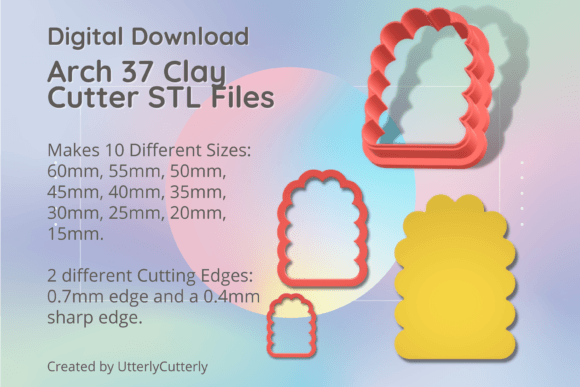
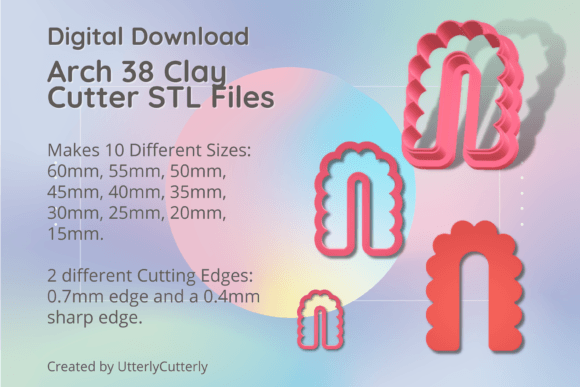
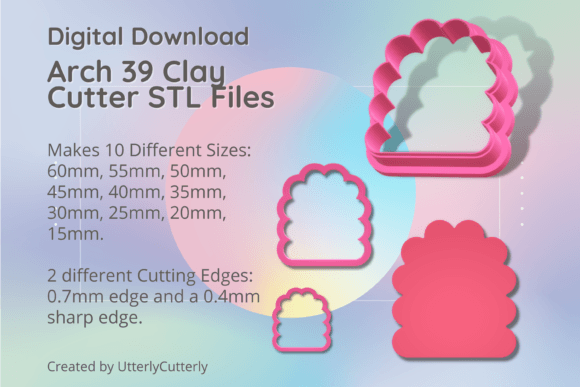
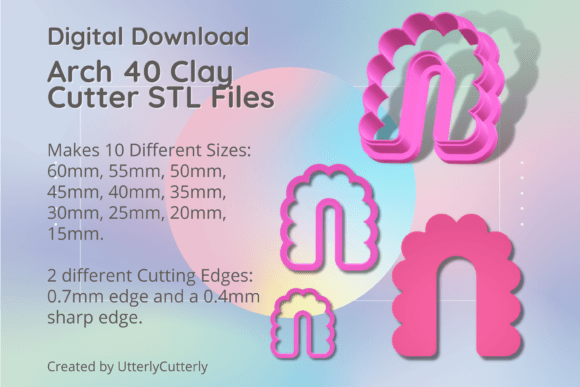
Professional design relies heavily on scale and proportion. A single shape can convey entirely different moods depending on its size. This digital pack includes ten graduated sizes, measured from the longest ends: 60mm, 55mm, 50mm, 45mm, 40mm, 35mm, 30mm, 25mm, 20mm, and 15mm. This granular sizing allows for sophisticated nesting and layering techniques.
For jewelry designers, the smaller increments (15mm–30mm) are essential for creating earring studs, charms, or ring blanks. The mid-range sizes (35mm–45mm) work beautifully for pendant bases or brooches. Larger formats (50mm–60mm) serve as statement pieces or functional components like hair clips and cookie cutters. Having access to the full spectrum means you can develop capsule collections where each piece relates to the others through form language, even if the function differs entirely. This consistency strengthens brand identity and makes merchandising more intuitive for customers.
Integrating Digital Assets into Creative Workflows
Treating 3D printable files as premium design assets rather than mere utility objects shifts how you approach product development. Just as a graphic designer selects a typeface based on readability, hierarchy, and brand perception, a maker must select cutter profiles based on material behavior and end-use. The Arch 41 Clay Cutter - Bubble Arc STL Dig functions similarly to a versatile sans serif font in typography; it is neutral enough to adapt to various styles but possesses enough character to anchor a design system.
When evaluating project fit, consider the interaction between the cutter’s geometry and your chosen medium. Polymer clay has memory and elasticity; a sharper edge (SE) reduces distortion during the cut, preserving the intended arch geometry after baking. Cookie dough spreads; a slightly taller wall and sharper edge help maintain definition before the dough hits the oven. Understanding these nuances allows you to leverage the dual-profile nature of this STL pack effectively. You aren't just printing a shape; you are manufacturing a specialized instrument calibrated for your specific creative output.
Practical Guidance for Printing and Usage
To maximize the value of this digital download, proper printer calibration is non-negotiable. Even the best-designed STL file will fail if layer adhesion is poor or flow rate is uncalibrated. For the Sharp Edge variants, ensure your nozzle is clean and your first layer squish is optimized to guarantee the 0.4mm tip prints accurately. Using a high-quality PLA or PETG filament is recommended for food-safe applications and durability. Avoid brittle filaments that may snap under the lateral forces applied during demolding.
Post-print processing should be minimal if your printer is tuned correctly, but light sanding of the rim can enhance performance. For clay work, some artisans apply a micro-coat of cyanoacrylate glue to the cutting edge to seal layer lines, resulting in an impossibly smooth release. Always test new prints on scrap material before committing to final products. This validation step mirrors the proofing process in editorial design, ensuring the asset performs as expected in real-world conditions.
Remember that this is a digital product. Upon payment, you receive immediate access to the files, eliminating shipping delays and inventory costs. This instant availability supports agile business models where you can prototype, iterate, and launch new designs within hours rather than weeks. As new STL files are added to the store weekly, you can continuously expand your toolkit, keeping your offerings fresh and aligned with emerging trends. The ability to mix and match the Arch 41 Bubble Arc with other digital assets creates endless possibilities for customization, empowering you to build a truly unique portfolio that reflects your personal style and professional standards.