Large Optical Illusion Clay Cutter STL Files
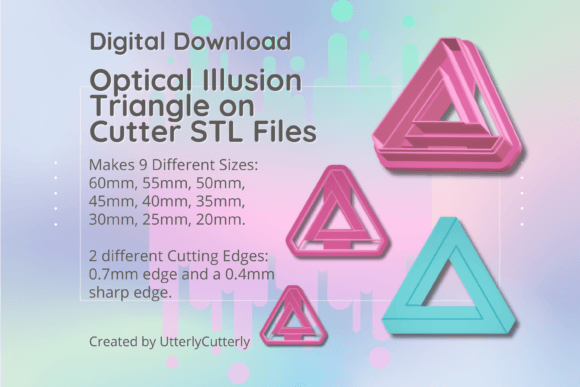
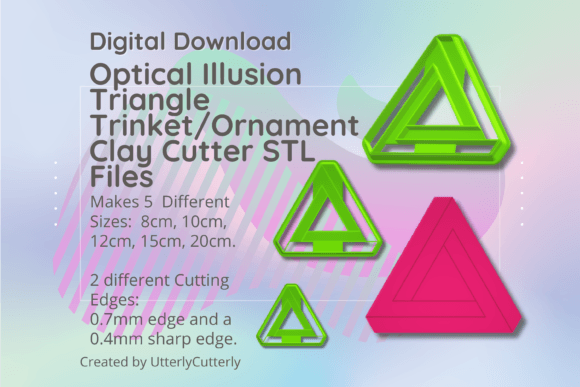
Geometric precision meets tactile creativity in this comprehensive digital bundle designed for makers who value both form and function. The Large Optical Illusion Triangle collection provides a versatile set of tools for creating visually striking polymer clay projects, ceramic trinket trays, and even culinary treats. Unlike standard cookie cutters that rely solely on outline, these STL files are engineered to produce depth and shadow, leveraging the triangle motif to create an optical illusion effect that elevates simple clay work into modern art.
This digital download is specifically optimized for 3D printing, ensuring that whether you are using a resin printer for high-detail jewelry components or an FDM printer for larger wall hangings, the results remain crisp and consistent. The design focuses on clean lines and structural integrity, addressing common pain points like warping during baking or dragging during cutting. By offering multiple sizes and edge profiles, this pack allows creators to curate custom sets that fit specific project requirements without needing to modify files in CAD software.
Technical Specifications and Print Optimization
Understanding the technical parameters of your cutter is essential for achieving professional results. This bundle includes five distinct sizes measured from the longest ends: 8cm, 10cm, 12cm, 15cm, and 20cm. This graduated sizing system supports everything from delicate earring charms to substantial serving platters. Crucially, the pack offers two specialized cutting edge types to accommodate different materials and finishing techniques.
- Standard Edge: Features a 0.7mm wall thickness with a 3mm thick base and a total height of 12mm. This robust profile is ideal for general-purpose polymer clay work where durability and ease of handling are priorities.
- Sharp Edge (SE): Abbreviated as SE in the file names, this variant includes a 1mm support wall tapering to a precise 0.4mm cutting edge. It shares the same 3mm base and 12mm height but delivers cleaner cuts with less material displacement, making it superior for detailed jewelry or softer clays.
For projects requiring surface texture, note that any embossing lines within the design are 10.5mm tall. To ensure the pattern transfers correctly without bottoming out, always condition your clay to a thickness greater than 1.5mm before cutting. When printing, orient the cutter flat on the build plate to maximize adhesion and minimize layer lines on the cutting face. A standard PLA or PETG filament works well for the Standard Edge, while resin is often preferred for the Sharp Edge variant to maintain the fine 0.4mm tolerance over repeated use.
Creative Applications Beyond Jewelry
While the optical illusion triangle is inherently suited for modern jewelry, its geometric versatility extends far beyond earrings and pendants. The larger 15cm and 20cm cutters transform this tool into a home decor asset. Consider creating interlocking wall hangings where multiple triangles are assembled to form a larger tessellated pattern. The optical illusion aspect becomes more pronounced at scale, turning a static wall piece into a dynamic visual experience that shifts with lighting and perspective.
Trinket trays and jewelry dishes benefit immensely from this design language. The angular nature of the triangle creates natural corners that can be pinched or folded up to form functional vessels. Because the cutter produces a bold graphic shape, these trays serve as standalone decorative objects even when empty. For ceramic artists, the sharp edge variant acts as an excellent slab roller guide, allowing you to cut leather-hard clay with minimal distortion before firing. The resulting bisqueware can be glazed in contrasting colors to further emphasize the illusory geometry.
Culinary Cross-Over Potential
Makers who operate hybrid studios often utilize their clay tools in the kitchen. These food-safe capable designs (when printed in appropriate certified resins or thoroughly sealed) make exceptional cookie and fondant cutters. The optical illusion translates beautifully to baked goods, particularly shortbread or gingerbread where structural definition holds up during baking. For cake decorators, the smaller 8cm and 10cm sizes provide uniform fondant accents that add architectural interest to buttercream finishes. Always verify material safety and dedicate specific cutters for food use to prevent cross-contamination with crafting supplies.
Adapting Designs for Different Audiences
The true value of a scalable STL bundle lies in its adaptability across different market segments and creative goals. Small business owners can leverage the size variety to create tiered product lines. Use the 8cm and 10cm cutters for entry-level impulse purchases like stud earrings or bag charms, while reserving the 15cm and 20cm versions for premium-priced statement pieces or home goods. This cohesive aesthetic across price points strengthens brand identity and encourages customers to collect matching items.
Educators and workshop facilitators will find the optical illusion theme particularly engaging for teaching spatial reasoning and color theory. The triangle format serves as an accessible introduction to tessellation and positive/negative space. Students can experiment with marbling techniques or mica shifts within the triangular boundary, learning how material manipulation interacts with geometric constraints. The availability of multiple sizes allows participants of varying skill levels to work comfortably; beginners can manage smaller footprints while advanced students tackle complex assemblies with larger formats.
Content creators and bloggers can use the dual-edge options to demonstrate technical proficiency. Showcasing the difference between the Standard and Sharp Edge cuts provides valuable educational content for followers struggling with clay drag or detail loss. Documenting the process of selecting the right cutter for specific clay bodies builds authority and trust, positioning your work as both artistic and technically informed.
Maintaining Quality and Workflow Efficiency
Consistency is key when working with digital fabrication tools. To keep your results clear and effective, establish a naming convention for your physical inventory that mirrors the digital file structure. Labeling storage bins with size and edge type (e.g., "12cm-SE") prevents confusion during production runs and streamlines the packing process for orders. Regular maintenance of your 3D printer nozzle or screen ensures that the critical 0.4mm and 0.7mm tolerances remain accurate; even minor calibration drift can compromise the cutting performance of these precision tools.
When designing new collections around these optical illusion bases, consider modularity. The triangle shape naturally lends itself to combination with other geometric STL files in our expanding library. New designs are added weekly, encouraging you to mix and match elements rather than relying on a single silhouette. This approach keeps your product offerings fresh and reduces design fatigue. By treating each cutter as a component in a larger system, you maximize the return on investment for every digital file acquired.
Remember that this is a digital product; no physical item will be shipped. Upon purchase, you gain immediate access to the STL files, allowing for instant integration into your workflow. Whether you are prototyping a new holiday ornament line at midnight or preparing materials for a weekend market, having on-demand access to professionally sized and tested cutter files removes logistical barriers to creation. Embrace the flexibility of digital manufacturing to refine your craft, optimize your production time, and explore the endless variations possible within a single, well-executed geometric form.